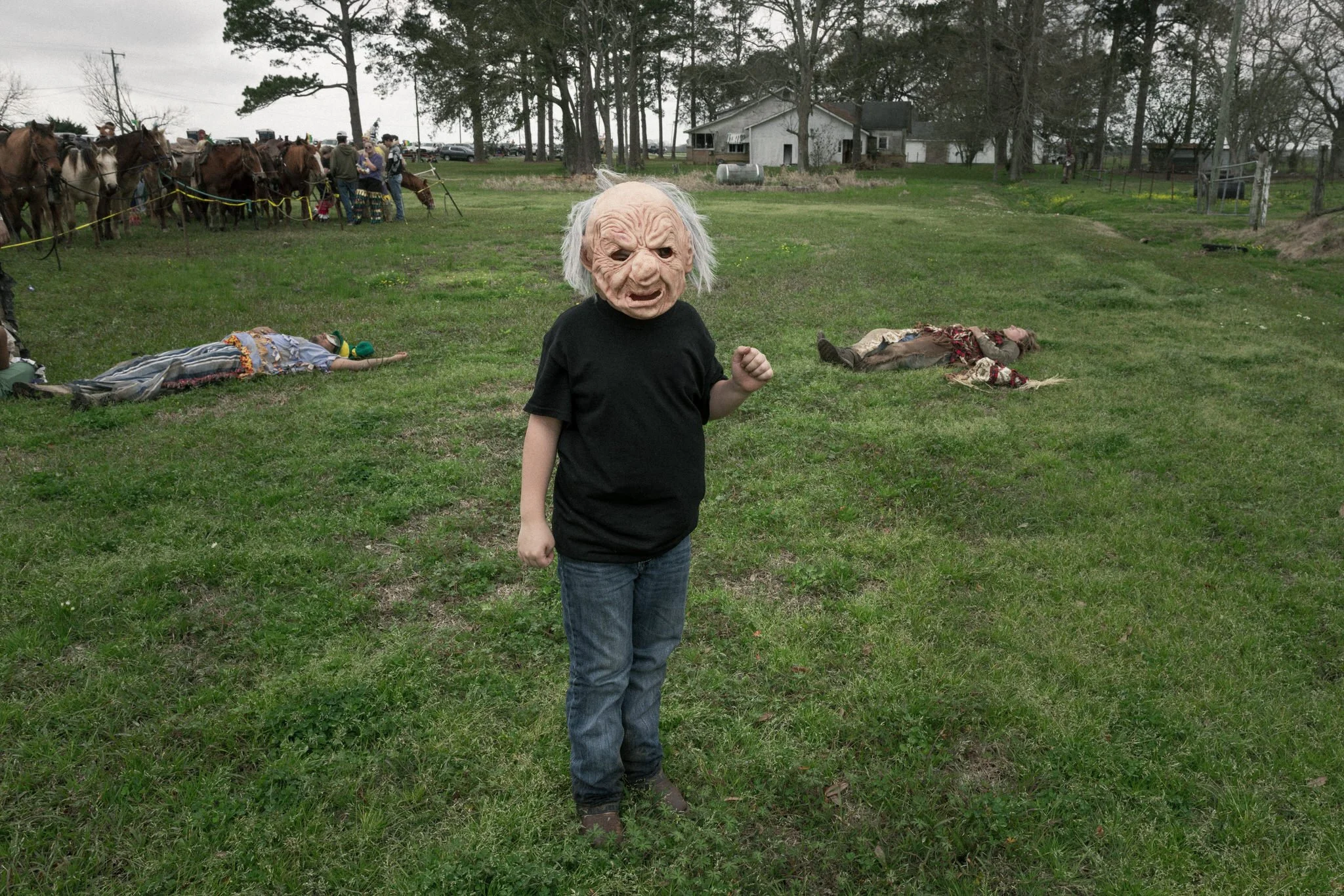
The Hidden Courir de Mardi Gras
A while back, I traveled to the Deep South of the United States to document and experience the traditional Courir de Mardi Gras celebration, which takes place every year in the rural towns of Louisiana. The festival occurs annually on Fat Tuesday, exactly 46 days before Easter.
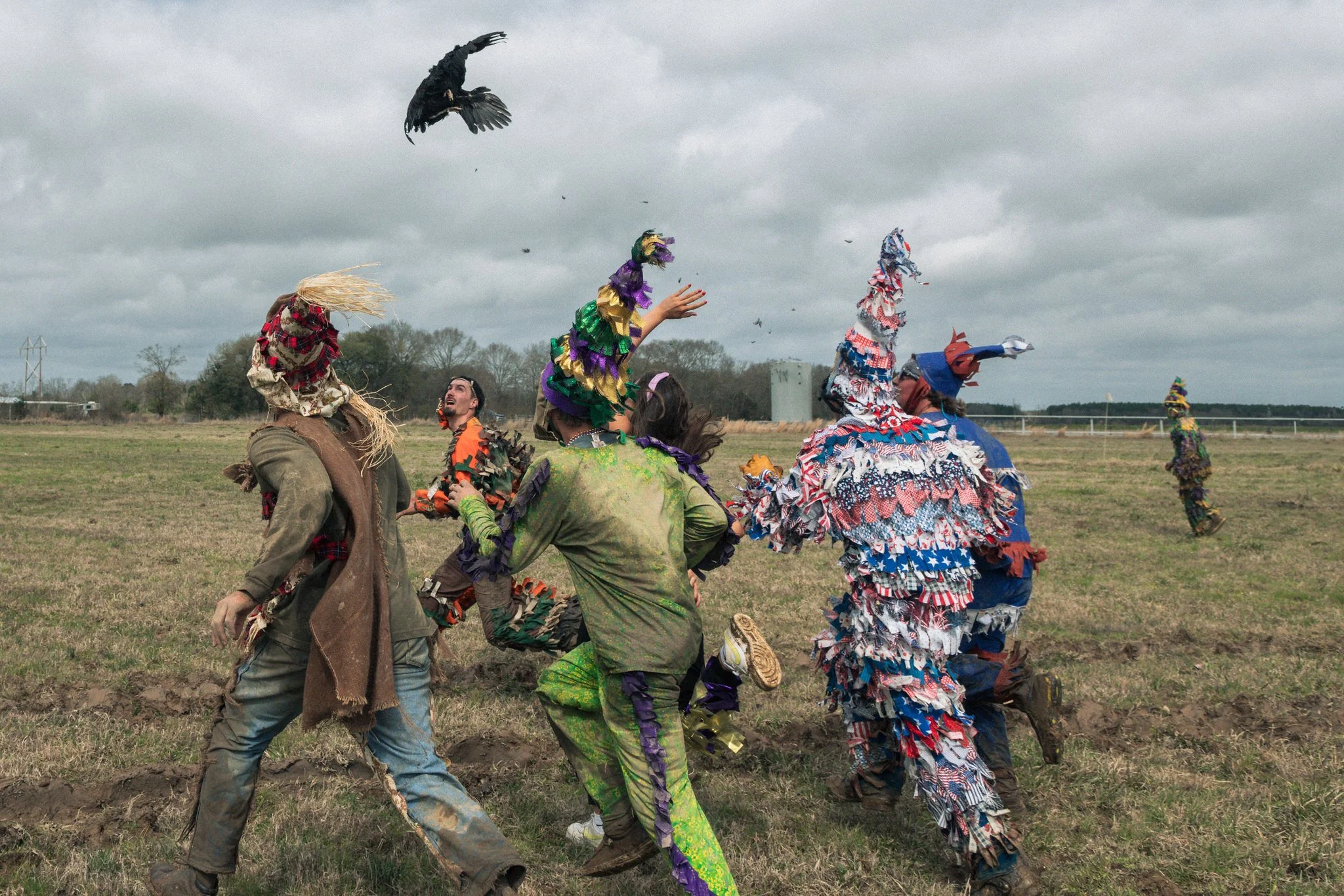
The person who catches the most chickens during the day is named the Courrir’s winner and celebrated throughout the town.
The Courir (meaning “run” in French) tradition originated in medieval France. Back then, villagers would take to the streets carrying large cooking pots, going from house to house and “begging” their neighbors for ingredients to prepare a traditional stew. French and Creole settlers brought the custom to North America and established it in Louisiana. Unlike the famous, grandiose Mardi Gras festival in New Orleans, where spectators collect beads and trinkets, the Courir is a deeply traditional celebration in which townspeople, like their ancestors, gather ingredients for a communal gumbo stew.
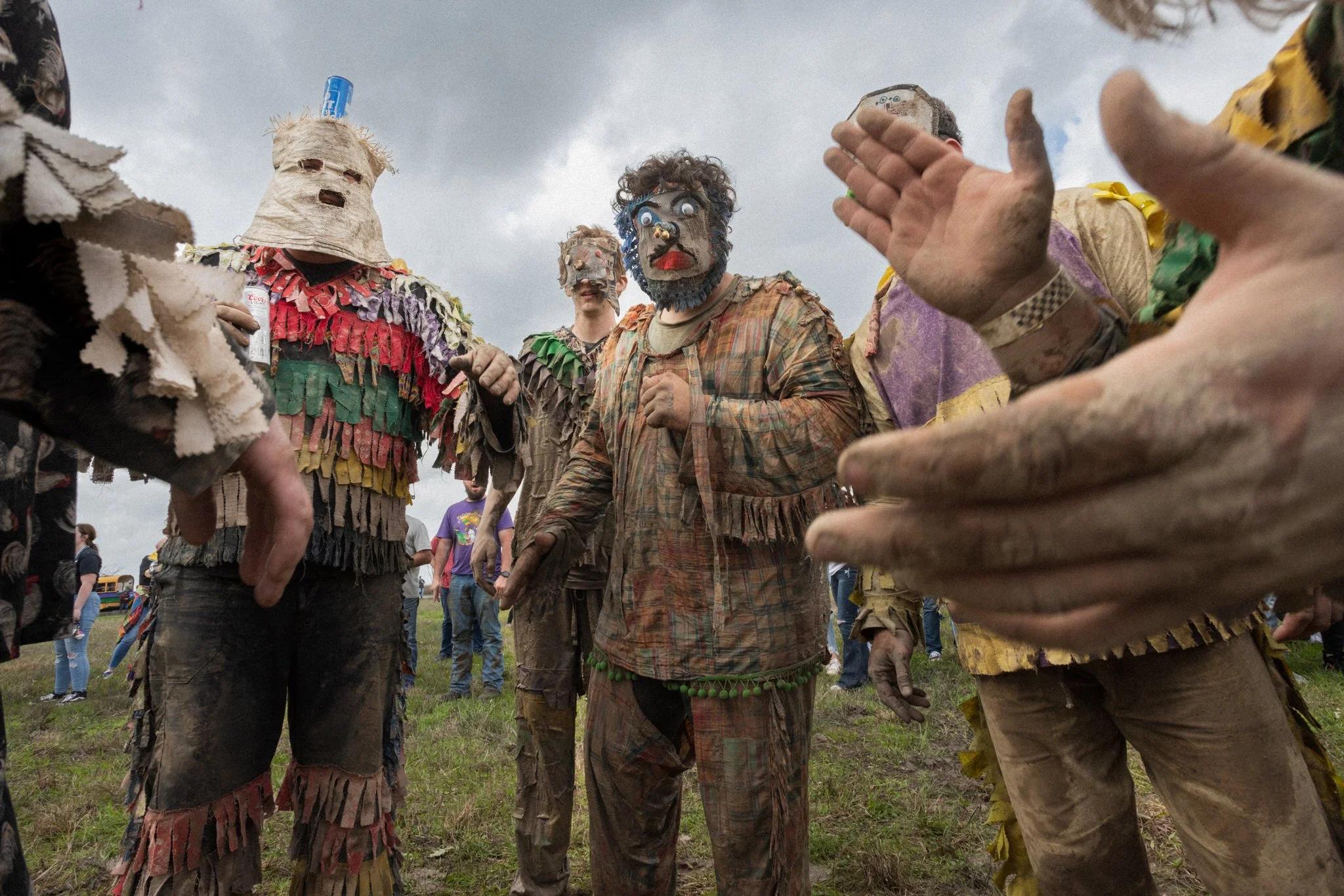
Adorned with elaborate and creepy costumes they've spent the year developing, the young men showcase their creations during the Courir, competing not only to capture the most chickens but also to wear the best costume.
Participants are mostly young men, fully covered from head to toe in colorful (and quite creepy-looking) elaborate costumes, adorned with frightening masks and tall, pointed hats called capuchons, which they have worked on for months before the event. The festivities begin early in the morning when the participants arrive at the gathering point, where the captains await them. The captains organize the parade and maintain order. At the gathering point, they remind participants of safety instructions and share the planned route. Only then does the much-anticipated Courir de Mardi Gras begin, an event the townspeople of Mamou (the town I visited) eagerly await all year.
Every time you get off the horse, it's an opportunity (or a reason) to dance, celebrate, or join in the shenanigans that often follow, fueled by alcohol, happiness, and tradition.
Standing on horses, performing flips into a muddy canal, or jumping over one another — the Courir is an exhilarating experience for both participants and spectators.
As they leave the gathering point, in true tradition, participants consume enormous amounts of alcohol and begin running amok, dancing, singing traditional songs, and engaging in playful antics. They roll in the mud, leap over each other, shout, and try to catch a girl or two for a two-step dance. Every now and then, the captains, identifiable by their cloaks decorated in the Mardi Gras colors of purple and gold, announce that it's time to move on. At that signal, the participants mount their horses and ride in a procession around town until sunset. Behind them follows an impressive convoy of townspeople in vehicles equipped with portable toilets, grills piled high with Southern food, and an absurd amount of alcoholic beverages.
Even if the town folk aren’t actively participating in the Courir, they still enjoy the event by joining a long convoy that follows the horses as they circle around the town.
Throughout the day, the convoy circles the rural areas surrounding the town, occasionally stopping at local farms. Following tradition, as participants wait at the farm’s entrance, the captain rides ahead to request permission from the landowner for the revelers to enter and carry out the run. This is the central custom of the Courionce inside the muddy farmyard: dozens of chickens are released, frantically attempting to escape their fate as the key ingredient in the communal gumbo. Local girls record how many chickens each participant catches, and by the end of the day, a grand winner is declared. For the young men, this is a serious event, almost a rite of passage, a chance to prove themselves. Though, in reality, many will be so intoxicated they’ll barely manage to stay on their horses. For that, there’s the drunk wagon (visible in one of the photos), where those too inebriated to ride safely are placed.
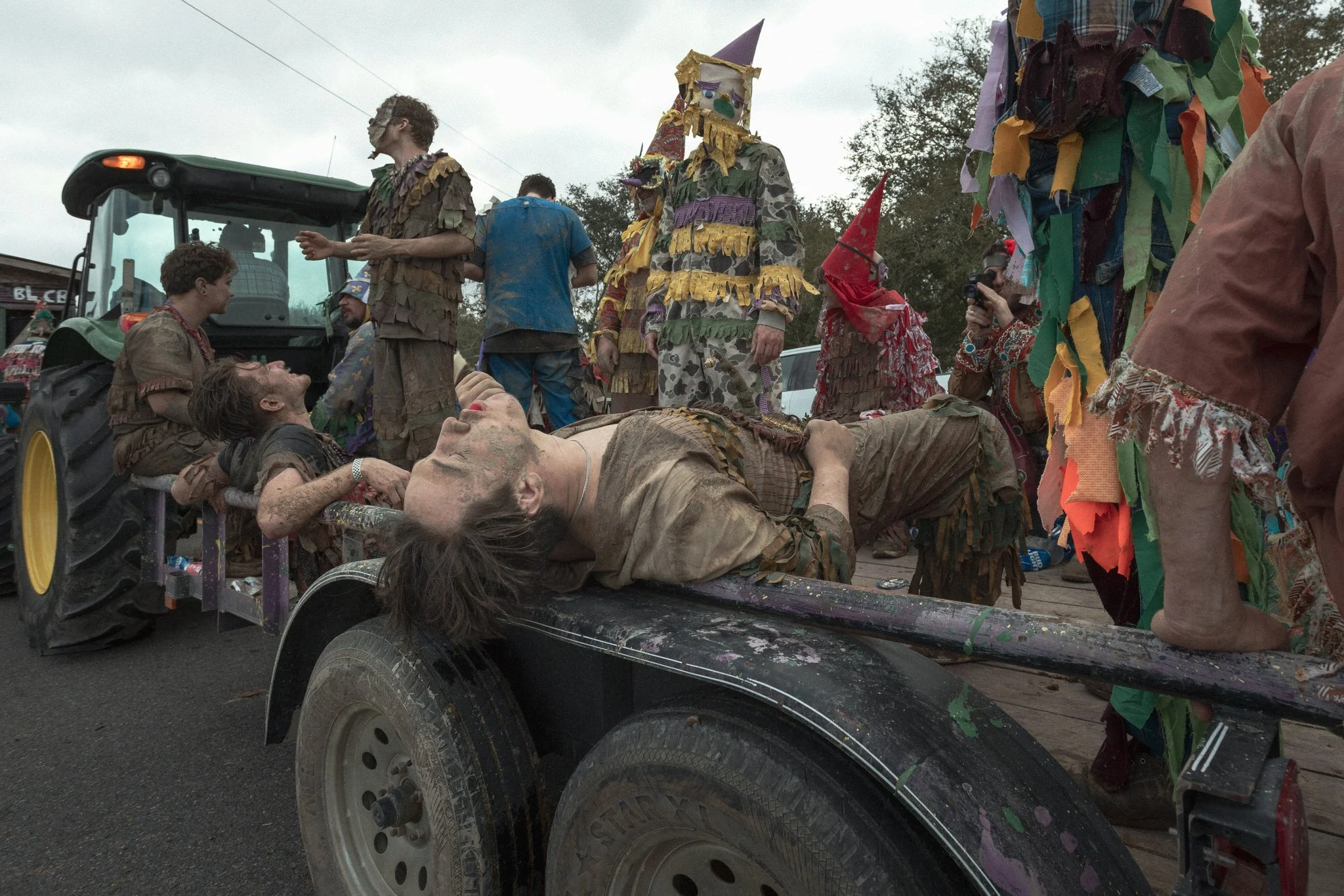
The drunk wagon, where every man who cannot hold their liquor, or keep riding their horse, eventually ends up.
At the end of the day, to the cheers of the crowd, the procession enters the town and heads straight to a massive street party. The riders parade down the main avenue, shouting and singing, proudly holding up the chickens they caught. The pride of Mammou’s residents was palpable; after all, this is the most significant event for them and the neighboring towns that celebrate the Courir.
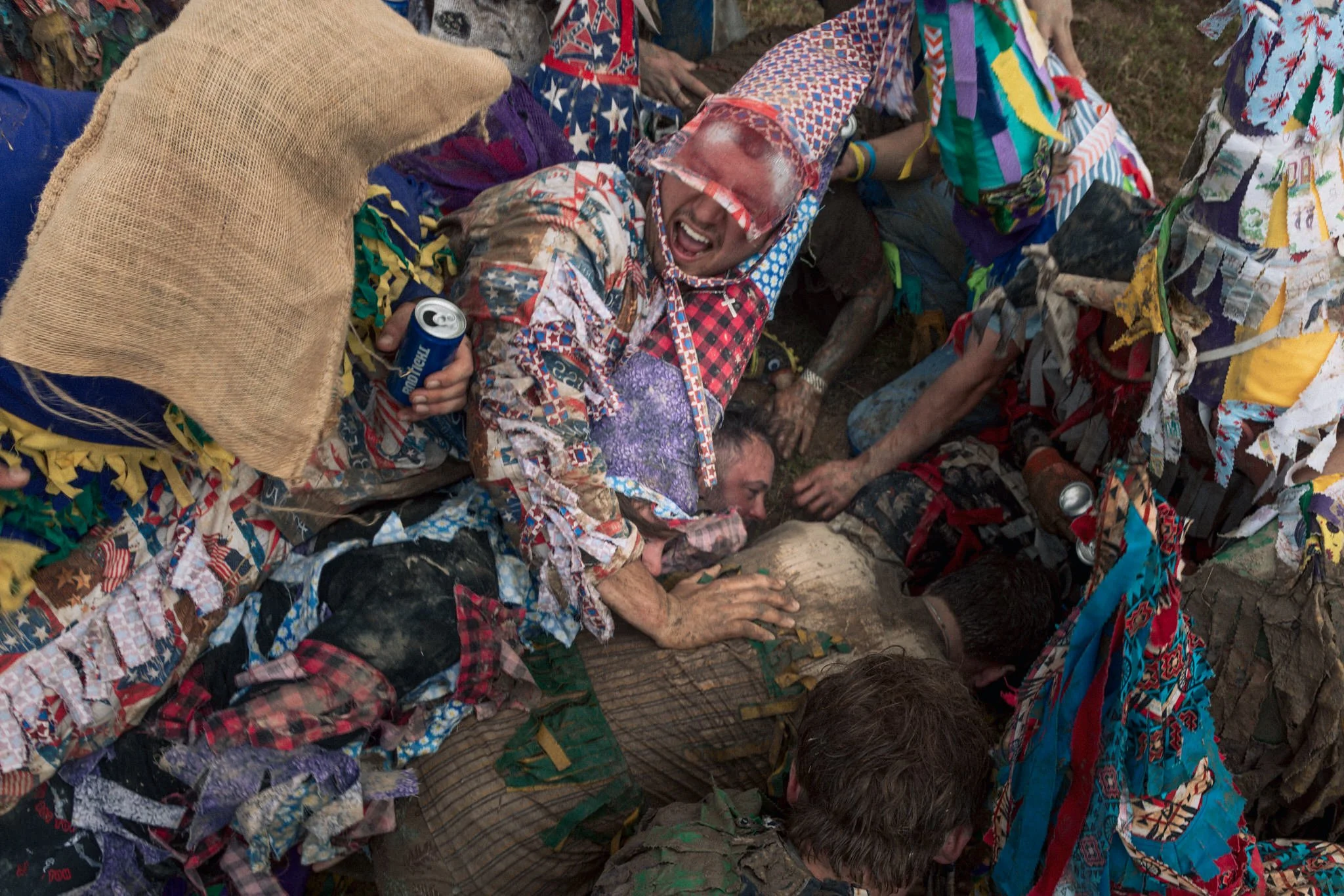
Catching an elusive chicken often involves the risk of getting buried under other enthusiastic chicken catchers. Unfortunate injuries are not uncommon during these attempts.
The Courir’s convoy returns to Mamou’s main street.
After a long day of running around, traveling, and filming, we entered the community center, where we were welcomed with a steaming plate of the famous gumbo. Outside, we could still hear the townspeople’s singing as they made their way home.
The few, the proud, the Mammou Mardi Gras.